
Tenant Rights and Property Law: What Your Landlord Cannot Do
Most renters are unaware of their legal rights until a problem arises. Federal and state laws protect tenants by ensuring they have a safe and livable home, receive proper notice before a landlord enters the property, and are granted a fair legal process before any eviction. These safeguards are designed to prevent abuse and promote fairness in rental agreements.
Importantly, these rights apply whether or not they are explicitly mentioned in a lease. Landlords are legally required to follow them, and tenants remain protected under the law at all times. Understanding these protections empowers renters to make informed decisions and confidently stand up for their rights.
What Are Your Basic Rights as a Tenant in the USA?
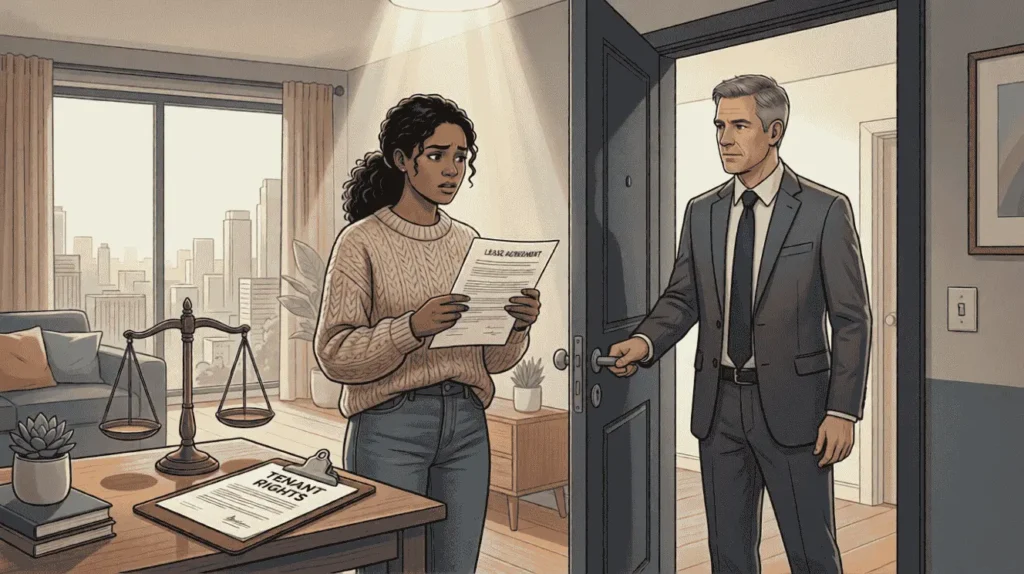
Every renter in the United States has core legal protections that apply regardless of what a lease says. You have the right to a livable home, privacy from your landlord, protection from illegal eviction, and the return of your security deposit. No clause in a lease can take these rights away.
The four rights every tenant has:
- Habitable home: Your landlord must keep the unit safe, heated, and structurally sound.
- Privacy: Your landlord cannot enter without proper notice, usually 24 to 48 hours.
- Due process: You cannot be removed without a legal court order.
- Security deposit return: Your deposit must come back within your state’s legal deadline.
Your Right to a Safe and Habitable Home
Your landlord is legally required to provide a home that is safe to live in. This is called the implied warranty of habitability and it exists in every U.S. state. It means your unit must have working heat, hot water, electricity, structural integrity, and no serious pest infestations.
If your landlord ignores a repair request that affects your health or safety, you have options. Most states allow you to send a written repair request and, if ignored, take legal action or withhold rent. Document every request in writing. A text message or email is enough to create a record.
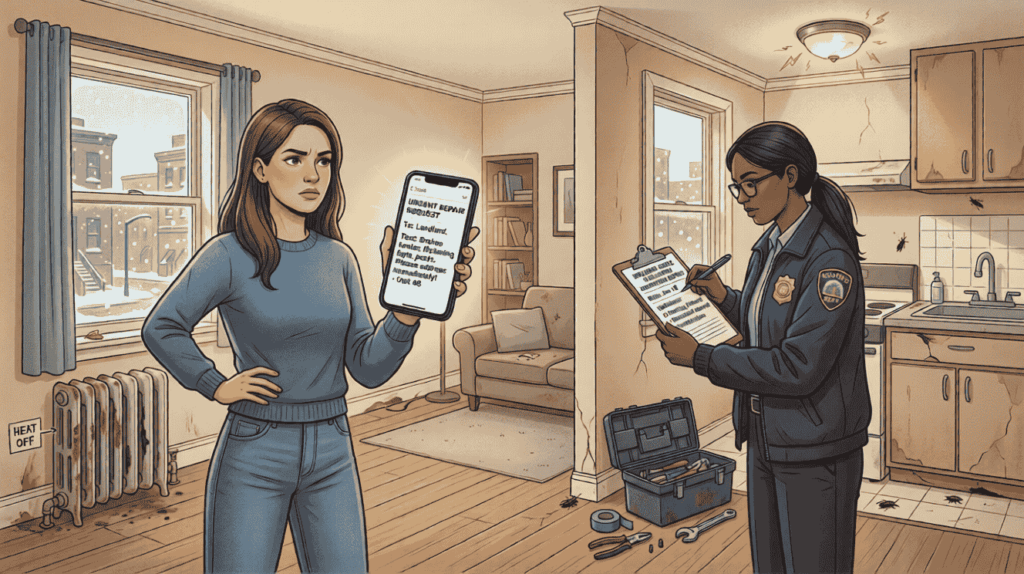
Real scenario: Kevin’s apartment had no heat for three weeks during winter. His landlord ignored two written requests. Kevin contacted his city’s housing code enforcement office. An inspector visited, cited the landlord for a violation, and the heat was fixed within five days. Kevin paid nothing and needed no lawyer.
Your Right to Privacy — What Your Landlord Cannot Do
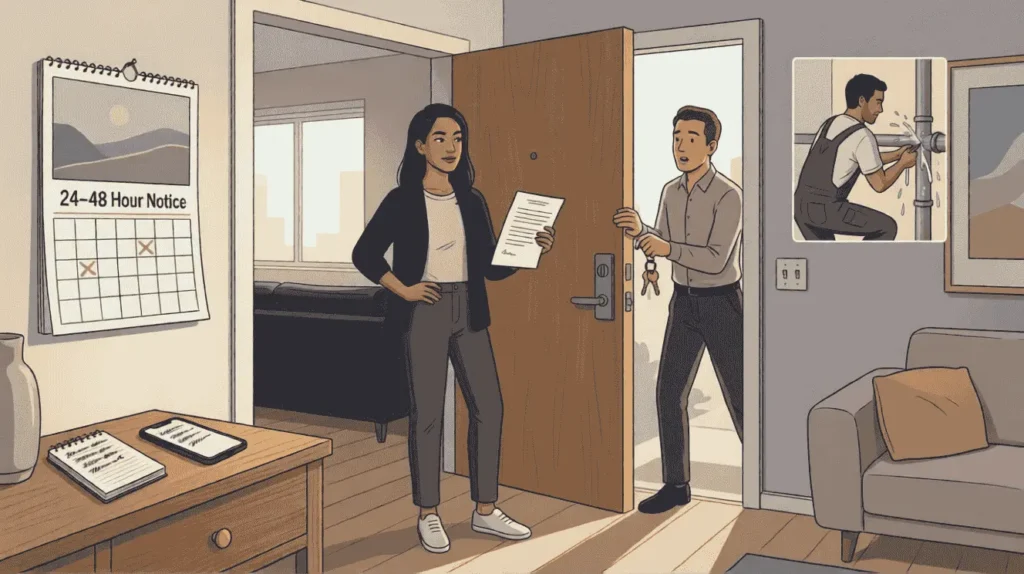
Your landlord does not have unlimited access to your home. In most U.S. states, landlords must give you 24 to 48 hours written notice before entering for non-emergency reasons. They cannot show up unannounced to inspect, make repairs, or show the unit to new tenants.
Entering without notice is a violation of your right to quiet enjoyment. It gives you legal grounds to complain, withhold rent in some states, or break your lease without penalty. If your landlord is entering repeatedly without notice, document every incident with dates and times.
There are limited exceptions. A landlord can enter without notice in a genuine emergency, such as a burst pipe or fire. Outside of emergencies, proper notice is the rule.
What Is an Illegal Eviction — and Is Yours Legal?
A legal eviction requires a court order. Your landlord cannot lock you out, remove your belongings, cut your utilities, or physically force you to leave without going through the courts first. These actions are called self-help eviction and they are illegal in every U.S. state.
Even if you owe back rent, your landlord must follow the legal process. That means written notice, a waiting period that varies by state, a court filing, a hearing, and a judge’s order before you can be removed. Tenants who face illegal lockouts or utility shutoffs can call local law enforcement or file an emergency complaint with a housing court.
Real scenario: Angela came home to find her locks changed after a dispute with her landlord over repairs. She had not received any court notice. She called her county’s housing court the same day. A judge ordered the landlord to restore her access within 24 hours and fined him under state self-help eviction law.
Security Deposit Rules — What Your Landlord Owes You
Most states require landlords to return security deposits within 14 to 45 days after a tenant moves out. The most common deadline is 30 days, used by 22 states. New York has the shortest deadline at 14 days. Missing that deadline has serious consequences for landlords.
In states like Texas, Massachusetts, and Colorado, willful violations trigger penalty damages — in some cases 2 to 3 times the original deposit amount. Your landlord also cannot deduct for normal wear and tear, only for damage beyond what ordinary use causes.
If your deposit is not returned on time, send a written demand letter by certified mail. Give the landlord 10 days to respond. If there is no response, file in small claims court. No lawyer is needed and filing fees are usually under $100.
| State | Days to Return Security Deposit |
|---|---|
| New York | 14 Days |
| California | 21 Days |
| Florida | 15 to 60 Days |
| Texas | 30 Days |
| Indiana | 45 Days |
| Oregon | 31 Days |
Fair Housing — When a Landlord Cannot Legally Reject You
The Fair Housing Act makes it illegal for a landlord to refuse to rent to you, charge you more, or treat you differently based on race, color, religion, sex, national origin, disability, or familial status. These protections apply to the application process, lease terms, and daily treatment as a tenant.
If a landlord tells you an apartment is taken but rents it to someone else shortly after, or adds conditions to your lease that others do not have, that is a potential Fair Housing violation. You can file a complaint at hud.gov at no cost. The U.S. Department of Housing and Urban Development investigates and can pursue penalties against the landlord.

How to File a Tenant Complaint Without a Lawyer
You do not need an attorney to protect your housing rights. Three free paths cover most tenant problems.
- Housing code enforcement: For habitability issues like no heat, mold, or pest infestations. Call your city or county code enforcement office. An inspector visits and cites the landlord directly. Free and fast.
- HUD Fair Housing complaint: For discrimination in housing. File at hud.gov or call 1-800-669-9777. HUD investigates at no cost to you.
- Small claims court: For security deposit disputes. Filing fees are typically under $100. Bring your lease, move-in photos, written requests, and your state’s deposit return deadline. No lawyer needed.
Filing early is always better. Most housing violations get worse the longer they go unreported. Find free legal help near you
When Do You Actually Need a Tenant Lawyer?
Many tenant issues can be resolved without legal help. But some situations genuinely call for an attorney. Get a lawyer when you face a complex wrongful eviction with financial damages, when your landlord has legal representation, or when a Fair Housing violation involves significant harm.
Many tenant attorneys work on contingency or for a reduced flat fee. A first consultation is almost always free. Legal aid organizations in every state also provide free help to qualifying renters for housing cases.

Your Next Step
You have rights as a renter. You now know what they are and where to start. Whether it is a withheld deposit, an unsafe unit, or an illegal lockout, the first step costs nothing. Document everything in writing, contact the right agency, and remember that the law is on your side more than most landlords want you to know.
This content is for general informational purposes only. It is not legal advice and does not create an attorney-client relationship. For guidance specific to your situation, please consult a licensed attorney in your state.