
Criminal Law Basics: Your Rights If You Are Charged With a Crime
Being charged with a crime is one of the most serious legal situations a person can face. The U.S. Constitution gives every accused person a set of rights that exist precisely to protect you from the full power of the government. These rights are not just legal technicalities — they are fundamental protections that apply to every person, regardless of the charge or circumstances. Whether you are facing a minor misdemeanor or a serious felony, these rights remain fully in effect from the moment of your arrest. Knowing these rights before you need them, and understanding how to exercise them properly, is one of the most important things you can do to protect yourself and ensure the legal process works in your favor.
What Is Criminal Law and How Is It Different From Civil Law?
Criminal law involves offenses against society as defined by government statutes. The government brings the case against you, not another private person. The stakes are different from civil cases — criminal convictions can result in fines, probation, or imprisonment.
Civil law involves disputes between private parties, like breach of contract or personal injury. In civil cases you can lose money. In criminal cases you can lose your freedom. That distinction is why the Constitution provides additional protections specifically for criminal defendants.
Your Constitutional Rights as an Accused Person
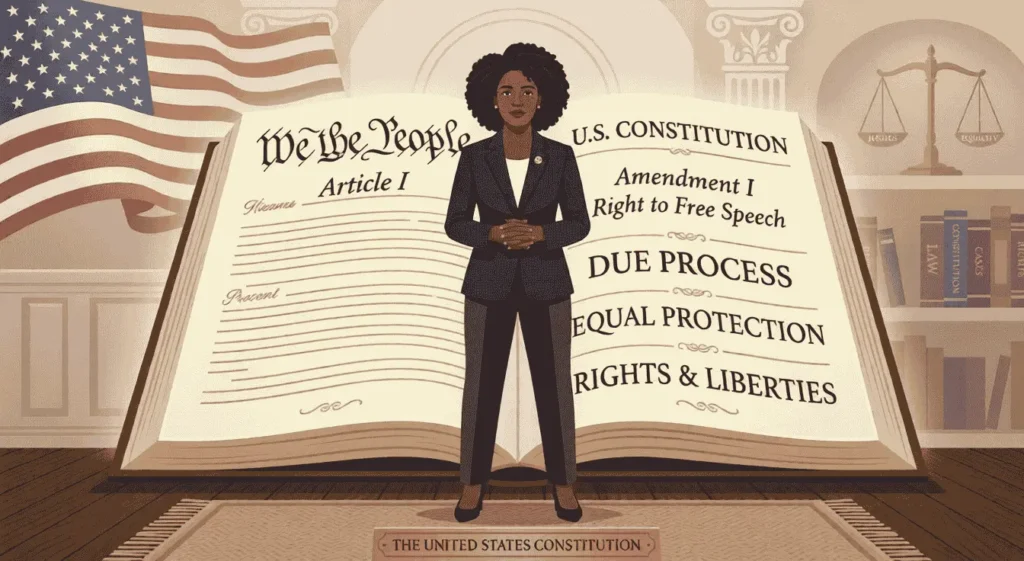
The Sixth Amendment guarantees every person accused of a crime a specific set of rights. These apply to both state and federal prosecutions and cannot be waived without your informed consent.
Your Sixth Amendment rights include:
- Right to a lawyer: You must have legal representation. If you cannot afford one, the court appoints a public defender at no cost.
- Right to a speedy trial: You cannot be held in limbo indefinitely without a trial date.
- Right to a jury: In cases carrying potential imprisonment, you have the right to be judged by a jury of peers.
- Right to know the charges: The government must tell you exactly what you are accused of.
- Right to confront witnesses: You have the right to cross-examine anyone who testifies against you.
Roughly four out of five criminal defendants in the United States rely on public defenders or court-appointed lawyers because they cannot afford private attorneys, according to the ACLU. If you are one of them, request your public defender immediately upon arrest.
The Difference Between a Misdemeanor and a Felony
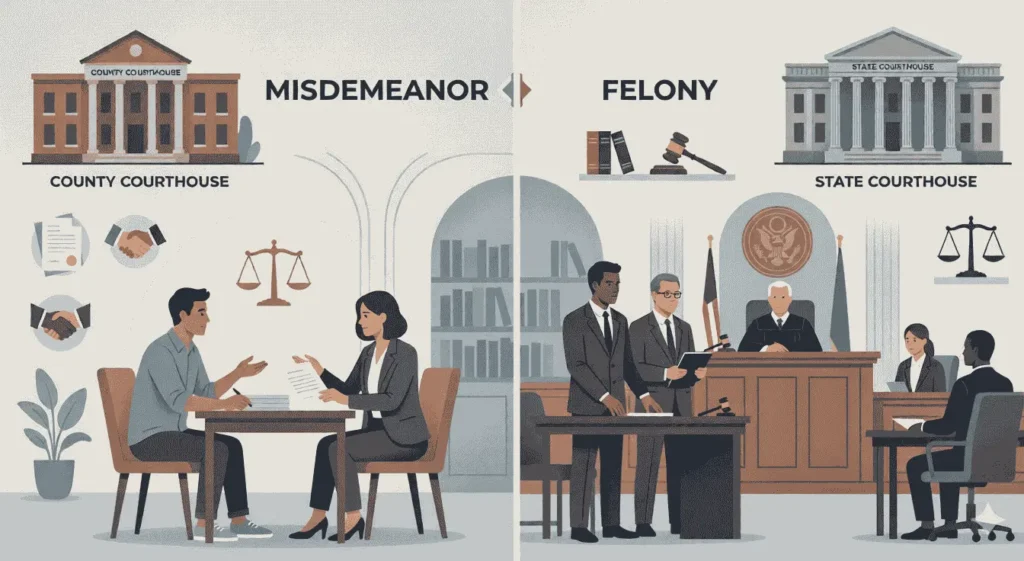
Not all crimes are equal. The distinction between a misdemeanor and a felony affects your rights, your penalties, and your life after the case is resolved.
A misdemeanor is a less serious offense typically punishable by up to one year in a local jail. Examples include petty theft, simple assault, and first-offense DUI in most states. You still have the right to an attorney and a trial.
A felony is a serious crime punishable by more than one year in state or federal prison. Examples include robbery, aggravated assault, drug trafficking, and murder. Felony convictions carry long-term consequences including loss of voting rights in some states, restrictions on employment, and loss of the right to own a firearm.
Real scenario: Tom was arrested for a misdemeanor theft charge. He was appointed a public defender. Instead of accepting the first plea offered, Tom and his attorney reviewed the evidence. The public defender identified a procedural error in how the evidence was collected. The case was dismissed. Tom had not said a single word without his attorney present from the moment of arrest .
What Happens After an Arrest — Step by Step
Understanding the process removes the panic and lets you make better decisions.
Booking
You are processed, photographed, and fingerprinted. Request a lawyer immediately at this stage.
Arraignment
First court appearance. Charges are read and you enter a plea. Never plead without consulting your attorney first.
Bail Hearing
Judge decides if you can be released before trial. Your attorney can argue for lower bail or own recognizance.
Discovery
Both sides exchange evidence. Your attorney reviews the government’s case and identifies key weaknesses.
Plea Negotiations
Most cases resolve through a plea deal. Your attorney negotiates reduced charges. You are never required to accept.
Trial
Case goes before a judge or jury. Prosecution must prove guilt beyond a reasonable doubt.
Miranda Rights — What They Actually Mean
Before police interrogate someone in custody, they must read Miranda rights. This includes your right to remain silent and your right to an attorney. If police fail to read your Miranda rights before a custodial interrogation, anything you say may be inadmissible in court.
The key word is custody. If you are not under arrest and are free to leave, Miranda rights do not technically apply. This is why police often try to keep conversations casual. The safest approach in any police questioning is the same: remain silent and ask for a lawyer.
How to Find Free Criminal Defense Help
If you cannot afford a lawyer, request a public defender immediately. Do not wait. Every criminal case that carries potential imprisonment includes the right to appointed counsel under the Sixth Amendment as confirmed in Gideon v. Wainwright (1963).
Legal aid organizations, law school clinics, and the public defender’s office are all options for free or reduced-cost criminal defense. Contact your county courthouse to be assigned a public defender at your first appearance. Find free legal help near you
Your Next Step
If you or someone you know is facing criminal charges, the first step is always the same: do not speak without a lawyer present. Request representation immediately. The constitutional right to an attorney exists because the justice system is complex and the consequences are serious. Use it.
This content is for general informational purposes only. It is not legal advice and does not create an attorney-client relationship. For guidance specific to your situation, please consult a licensed attorney in your state.