
Your Rights During a Police Stop in the USA
Most people panic during a police stop because they do not know what the law actually allows. The Fourth Amendment protects every person in the United States from unreasonable searches and seizures — whether you are a citizen or not. Knowing exactly what to say in those first 60 seconds can make all the difference.
What Are Your Rights During a Police Stop?
You have three core rights during any police stop in the United States: the right to remain silent, the right to refuse a search without a warrant, and the right to an attorney if arrested. These rights apply on the street, in a car, and at home. They apply to everyone regardless of immigration status.
The three things to remember:
- Right to silence: You do not have to answer questions beyond basic identification in most states.
- Right to refuse search: You can say no to a search if police do not have a warrant or probable cause.
- Right to an attorney: If arrested, ask for a lawyer immediately and stop talking.
What to Say During a Street Stop?
If police stop you on the street, stay calm and keep your hands visible. You can ask one direct question: “Am I being detained or am I free to go?” If they say you are free to go, walk away calmly. If they say you are being detained, state clearly: “I am exercising my right to remain silent.”
You are not required to answer questions about where you are going, what you are doing, or who you were with. In most states, you are only required to give your name if asked. Do not lie to police. Do not argue. Simply state your right to silence and ask for a lawyer if the situation escalates.
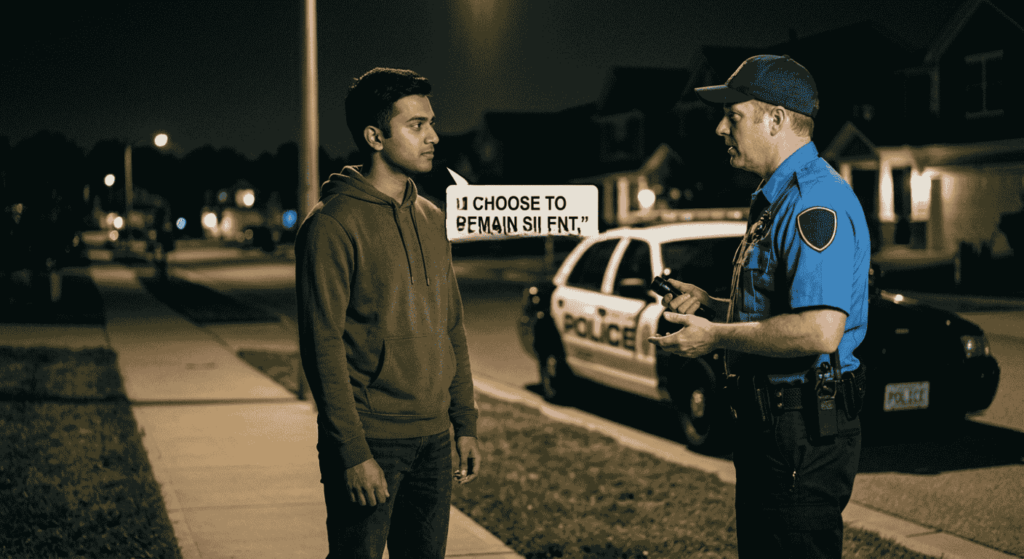
Real scenario: During a street stop, Carlos asked calmly, “Am I being detained or free to go?” The officer said he was being detained for questioning. Carlos stated he was exercising his right to remain silent and asked if he needed a lawyer. The officer found no basis to hold him and released him within minutes. No confrontation. No arrest.
Your Rights During a Traffic Stop
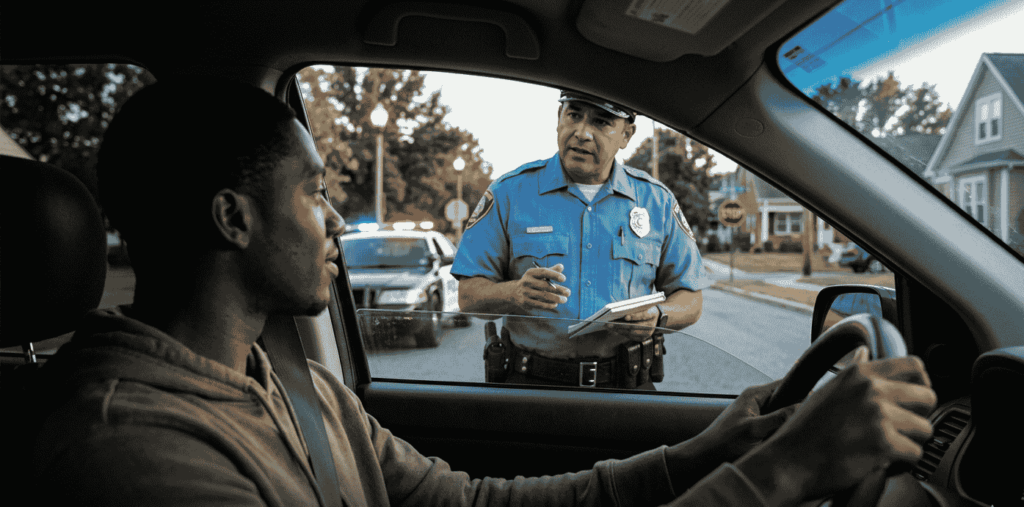
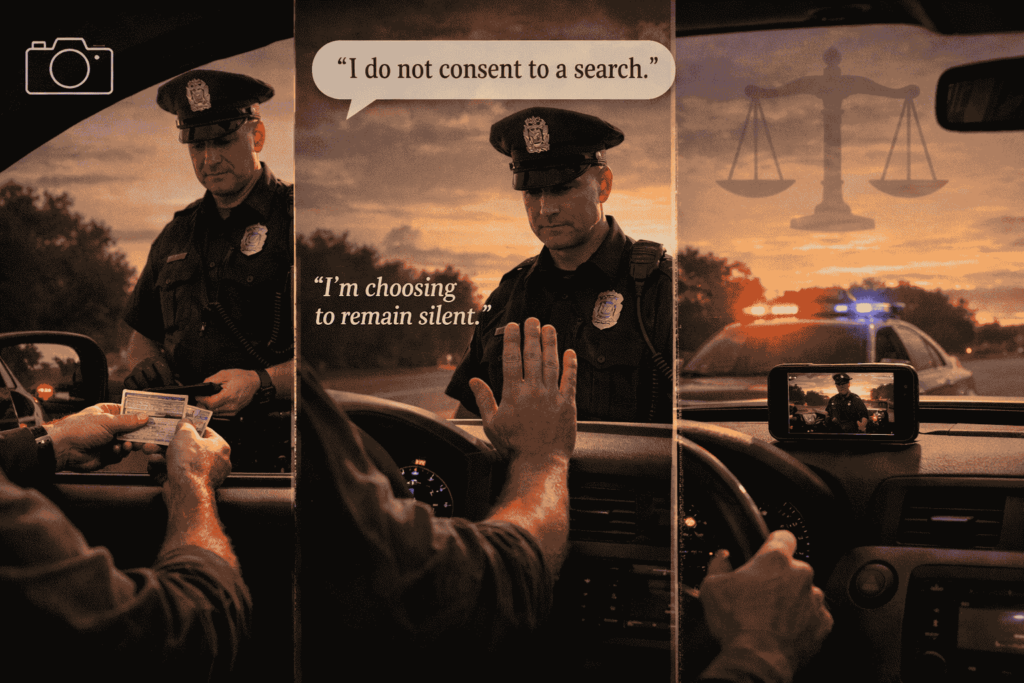
Pull over safely and quickly. Keep your hands on the steering wheel. When the officer approaches, you can provide your license, registration, and insurance. You are not required to answer questions like “Do you know why I pulled you over?” or “Where are you coming from?”
Police can ask you to step out of the vehicle during a traffic stop. You must comply with that request. However, they cannot search your car without your consent, a warrant, or probable cause. If they ask to search your car, say clearly: “I do not consent to a search.” This does not guarantee they will not search, but it protects your legal rights if evidence is found.
You have a First Amendment right to record police during a stop in public. Federal courts have upheld this right. Be open about it and do not interfere with the officer’s duties while recording.
If Police Want to Search Your Home
Police need a warrant to enter your home in almost all situations. If an officer comes to your door without a warrant, you do not have to let them in. You can speak through the door. You can ask to see the warrant before opening. A warrant must specifically describe the place to be searched and what they are looking for.
If police claim an emergency exists, they may enter without a warrant. But a genuine emergency must exist. “We want to look around” is not an emergency. If you are unsure, do not physically block entry, but clearly state: “I do not consent to this search.” That statement protects you in court.
If You Are Arrested — What to Do Immediately
If police arrest you, say these words and nothing else: “I want a lawyer.” Then stop talking. Do not try to explain yourself. Do not answer questions while waiting for your lawyer. Anything you say can and will be used against you in court.
If you cannot afford a lawyer, the court must appoint one at no cost. This right comes from the Sixth Amendment and was confirmed in Gideon v. Wainwright (1963). Request your public defender by name as soon as you are processed.
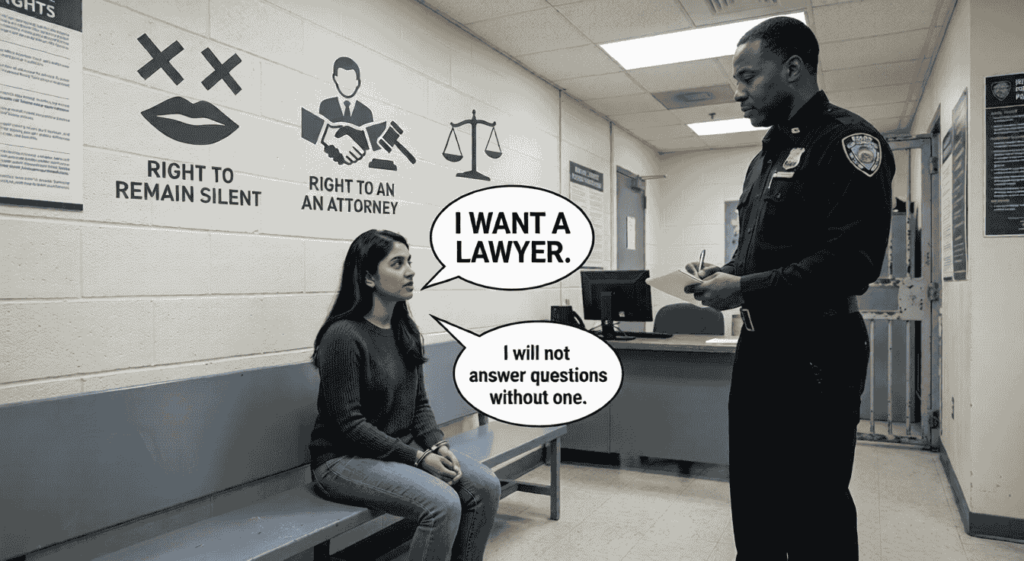
Real scenario: Joyi was arrested and immediately said, “I want a lawyer. I will not answer questions without one.” She stopped talking. At her hearing, the prosecutor had very little usable evidence because Joyi had not provided any statements. Her attorney negotiated a dismissal. Those five words protected her entire case.
What Police Cannot Legally Do
Police cannot hold you indefinitely without charge. If arrested without a warrant, you are entitled to a judicial determination of probable cause within 48 hours. Police cannot use excessive force during a lawful stop. They cannot punish you for asserting your rights, though some will attempt to pressure you.
If your rights are violated during a stop or arrest, document everything immediately. Write down the officer’s name and badge number, the time, the location, and exactly what was said. This information is critical for any legal action you may take.
Your Next Step
Your rights during a police stop are clear. Stay calm, know the three phrases, and exercise them. You are not required to make the officer’s job easier by volunteering information. Asserting your rights is not confrontational. It is constitutional.
This content is for general informational purposes only. It is not legal advice and does not create an attorney-client relationship. For guidance specific to your situation, please consult a licensed attorney in your state.