Small Claims Court Guide: How to Sue Someone Without a Lawyer
Small claims court exists for one simple reason, to give regular people a fast, low cost way to resolve money disputes without needing a lawyer. Every year, more than 4 million cases are filed across the United States, which shows how common and useful this option really is. Most people who come prepared, bring the right documents, and explain their situation clearly often walk away with a judgment in their favor. It is designed to be straightforward, practical, and accessible, even if you have no legal experience at all.

What Is Small Claims Court and What Can You Use It For?
Small claims court is a simplified civil court designed for money disputes between individuals, businesses, or both. No jury, no complex legal rules, and in most states no lawyers allowed in the courtroom. You present your case directly to a judge with your evidence.
Common situations people win in small claims :
- Security deposit not returned by a landlord.
- Unpaid loan from a friend or family member.
- Car repair damage caused by a mechanic.
- Defective product a store refuses to refund.
- Contractor who took payment but did not finish the job.
How Much Can You Sue For in Small Claims Court?
Every state sets its own limit. Most states allow claims between $5,000 and $10,000. Tennessee allows up to $25,000. Kentucky and Rhode Island cap claims at $2,500. California allows up to $12,500 for individuals.
Filing fees are low. In New York City, filing costs $15 to $35 depending on claim size. In California, fees run $30 to $100. In Texas, fees range from $54 to $100 depending on the county. If you win, the judge can order the defendant to reimburse your filing fee as part of the judgment.
| State | Claim Limit | Filing Fee |
|---|---|---|
| California | $12,500 | $30 to $100 |
| New York | $10,000 | $15 to $35 |
| Texas | $20,000 | $54 to $100 |
| Florida | $8,000 | $55 to $300 |
| Tennessee | $25,000 | Varies |
Step-by-Step: How to File a Small Claims Case
Filing is simpler than most people expect. Here is how it works from start to finish.
Send a demand letter first
Before filing, send the other party a written demand giving them 10 to 14 days to resolve the issue. Keep a copy. Many courts require this step, and it often resolves the dispute without a court date.
Fill out the claim form
Go to your local courthouse or your court’s website. Fill out the plaintiff’s claim form. State the facts simply: who owes you, how much, and why. No legal language needed.
Pay the filing fee
Pay at the clerk’s office. If you cannot afford it, ask for a fee waiver. Many courts grant them to low-income filers.
Serve the defendant
The defendant must be formally notified. Most courts handle this by certified mail. You may also use a process server or sheriff for a fee of $40 to $100.
Prepare your evidence
Gather contracts, receipts, photos, text messages, emails, and any witness statements. Organize them chronologically. Make three copies — one for you, one for the judge, one for the defendant.
Go to court
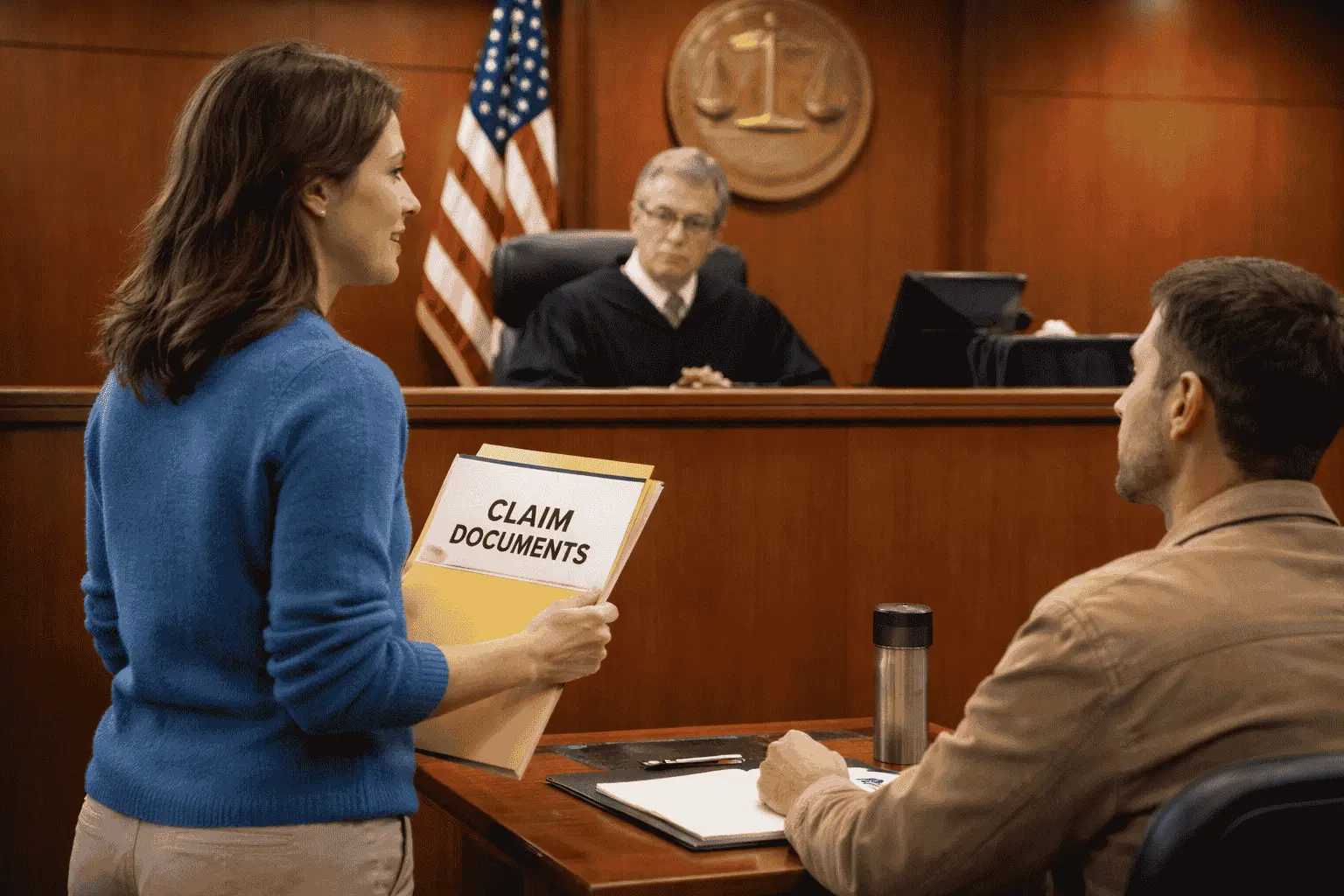
Most hearings are scheduled 30 to 90 days after filing. Arrive early. Speak directly to the judge. Be factual, brief, and calm. Let your evidence speak.
Real scenario: Rachel paid a contractor $3,200 to remodel her bathroom. He took the money, did half the work, and stopped responding. Rachel sent a demand letter first. No response. She filed in small claims for $3,200. She brought her contract, payment receipts, and before-and-after photos. The judge ruled in her favor in under 20 minutes. Total cost to Rachel: $75 in filing fees.
What Happens If You Win — And How to Collect
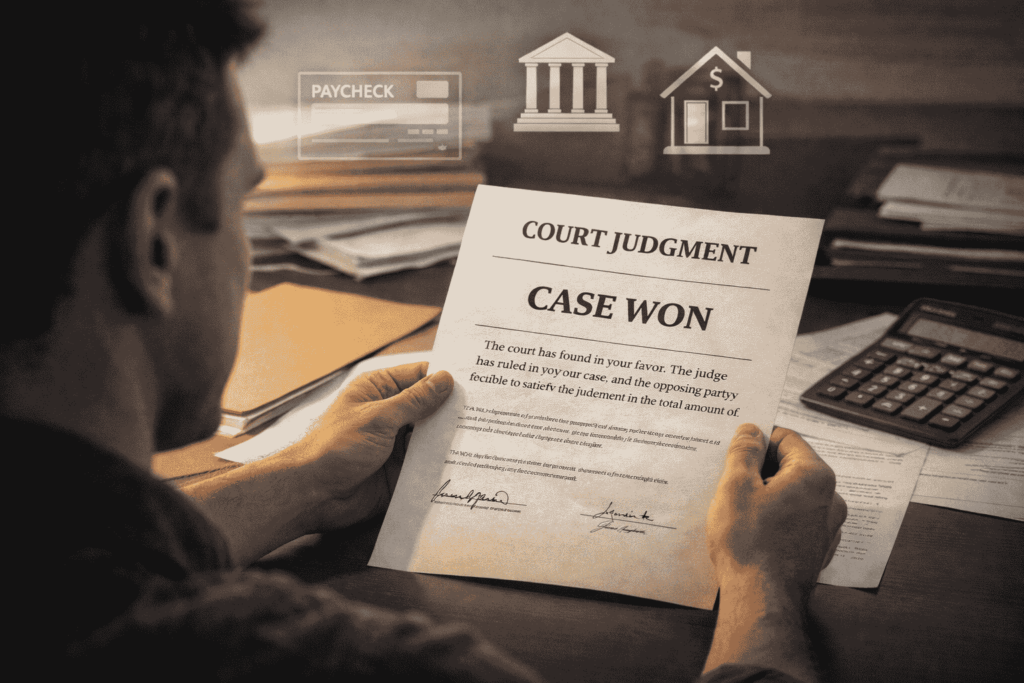
Winning a judgment is step one. Collecting is step two. The court does not automatically collect money for you. About 70% of small claims plaintiffs who appear win judgments, but collecting can take effort.
If the defendant does not pay voluntarily, you have legal tools. You can request wage garnishment, meaning the court orders their employer to deduct money from their paycheck. You can file a bank levy to pull funds directly from their account. You can place a lien on their property. Each of these requires a separate filing but uses your winning judgment as the basis.
What You Cannot Do in Small Claims Court
Small claims court only awards money. It cannot force someone to do something, like complete a job or return a specific item. If you want a contractor to finish work rather than pay you back, you need a different type of court. Small claims also cannot handle landlord-tenant evictions, divorce, or custody matters.
You also cannot split one large claim into multiple small claims cases to get around the limit. If you are owed $20,000 in a state with a $10,000 limit, you must either reduce your claim or file in a higher court.
Your Next Step
If someone owes you money and is ignoring you, small claims court is your most direct path to justice. Start with the demand letter. If that fails, file the claim. The process is designed for people without legal training, and most judges respect a well-organized, straightforward presentation. Find free legal help near you
This content is for general informational purposes only. It is not legal advice and does not create an attorney-client relationship. For guidance specific to your situation, please consult a licensed attorney in your state.