
Legal Information vs Legal Advice
Legal Information vs Legal Advice: What Is the Real Difference and Why It Matters
Most people use these two terms like they mean the same thing. They do not, and mixing them up is one of the most common mistakes people make when facing a legal problem. Acting on general information as though it were personalized advice has cost people their cases, their deposits, and their deadlines.
According to the Legal Services Corporation, 74% of low-income households face at least one civil legal problem annually, yet only 14% get adequate help. Studies of U.S. federal courts show that unrepresented parties lose 80 to 90% of cases. That gap exists largely because people did not know which type of help they actually needed or when to ask for it.
This guide breaks down exactly what separates legal information from legal advice, when each is enough, and how to find real help when your situation demands it.

What Is the Difference Between Legal Information and Legal Advice?
Legal information explains how the law works in general. Legal advice applies the law to your specific situation. One is available to everyone for free. The other can only come from a licensed attorney who is legally accountable for what they tell you.
People who understand this distinction get help sooner, ask better questions, and make far fewer costly mistakes.
What Is Legal Information?
Legal information explains the law in general terms and applies to everyone equally. It helps people understand rules, procedures, and basic rights. It does not tell you what to do in your specific situation, and it carries no legal accountability if it turns out to be incomplete for your case.
Here is a clear way to understand it. Reading that workers have the right to a safe workplace is legal information. Deciding whether your specific working conditions violate OSHA is not. Knowing tenants can request repairs is legal information. Determining whether your landlord broke housing codes is not.
Legal information can be found in government websites, law books, online articles, and educational sites like this one.

What Is Legal Advice?
Legal advice is personalized guidance that only a licensed attorney can provide. It applies the law directly to your facts and tells you what action to take. It is protected by attorney-client privilege. The attorney giving it is legally accountable if that guidance causes you harm.
Unauthorized legal advice from unlicensed individuals is illegal in the United States. This includes advice from law students, paralegals acting alone, and online forums where anonymous users answer legal questions.

Real-World Scenario: Sarah read online that tenants can withhold rent if a landlord fails to make repairs. She withheld rent without following her state’s specific written notice requirement. Her landlord filed for eviction. A licensed attorney later told her she had a strong case but lost leverage by skipping one procedural step. General information without specific advice cost her months of stress.
A Side-by-Side Comparison
| Feature | Legal Information | Legal Advice |
|---|---|---|
| Who can provide it | Anyone | Licensed attorney only |
| Is it personalized | No | Yes |
| Legally accountable | No | Yes |
| Protected by privilege | No | Yes |
| Cost | Usually free | Varies, often free consult |
When Is Legal Information Enough?
Legal information is enough in many everyday situations. You do not always need a paid attorney to protect yourself. Legal information is enough when you are trying to understand how a process works before taking action, when you are preparing questions to ask a lawyer, when the dispute is small and straightforward like a small claims filing, or when you want to understand your rights before a problem gets bigger.
When Do You Need Actual Legal Advice?
You need a licensed attorney when the stakes are high enough that being wrong has real consequences. Get a lawyer when you are facing a lawsuit or criminal charge, when significant money or property is at stake, when family custody or divorce issues are involved, when you are being asked to sign a document with long-term consequences, or when the other party already has a lawyer.
Real-World Scenario: David was served eviction papers and found an article online explaining that tenants have 30 days to respond in most states. His state required 10 days. He missed the deadline. A default judgment was entered against him. One call to a legal aid office on day one would have changed the outcome entirely.
Types of Legal Guidance You Should Know
Not all legal help is the same. Understanding which type fits your situation helps you get the right help at the right time.
- Preventive guidance helps you avoid problems before they happen. It includes reviewing contracts before signing, setting up a will or power of attorney, and making sure your agreements are legally sound. One early consultation can prevent years of costly disputes.
- Transactional guidance covers major legal steps like buying property, starting a business, or entering a significant financial agreement. A lawyer in this role reviews terms, catches risky clauses, and makes sure you are protected before you commit.
- Litigation guidance is what you need when a dispute goes to court. It covers everything from evidence gathering to trial strategy. This is where having a licensed attorney makes the single biggest difference in outcome.
![Finding the right attorney takes more than a Google search. Start with your state bar association. Every state has an official directory of licensed attorneys where you can search by specialty, verify their license is active, and check for any disciplinary history or prior complaints. Use referral services that connect clients with attorneys by area of law. Search specifically by practice area and county, for example "Family Law Attorney — [Your State/County]." Always verify credentials through your state bar before signing anything or paying any fee. Ask directly about their experience with cases similar to yours, their fee structure, and their response time for client communication.](https://thelegaladvicebasics.net/wp-content/uploads/2026/04/Types-of-Legal-Guidance-Explained-Preventive-Transactional-Litigation.webp-1024x683.webp "Legal Information vs Legal Advice 4")
How to Find and Choose a Civil Attorney
Finding the right attorney takes more than a Google search. Start with Your state bar association. Every state has an official directory of licensed attorneys where you can search by specialty, verify their license is active, and check for any disciplinary history or prior complaints.
Use referral services that connect clients with attorneys by area of law. Search specifically by practice area and county, for example “Family Law Attorney — [Your State/County].”
Always verify credentials through your state bar before signing anything or paying any fee. Ask directly about their experience with cases similar to yours, their fee structure, and their response time for client communication.
Questions to Ask During a Lawyer Consultation
Walking into a consultation prepared means you get better answers in less time. Gather all relevant documents before the meeting including contracts, emails, letters, and a clear timeline of events. Then come with these specific questions ready.
Ask what your legal options are in this situation. Ask how much time you have to respond or act. Ask what evidence will strengthen your position. Ask whether there are alternatives to going to court. Ask about their experience with cases like yours and their fee structure.
Prepared clients consistently get more useful answers from the same consultation.
Red Flags When Hiring a Lawyer
No clear fee agreement before work begins is a serious red flag. Any attorney who promises guaranteed results is either dishonest or uninformed because law is never certain. Poor communication during early conversations will only get worse once they have your money. An attorney who cannot confirm their active license through your state bar should never be hired. Any advisor offering personalized legal guidance without a license is operating illegally.
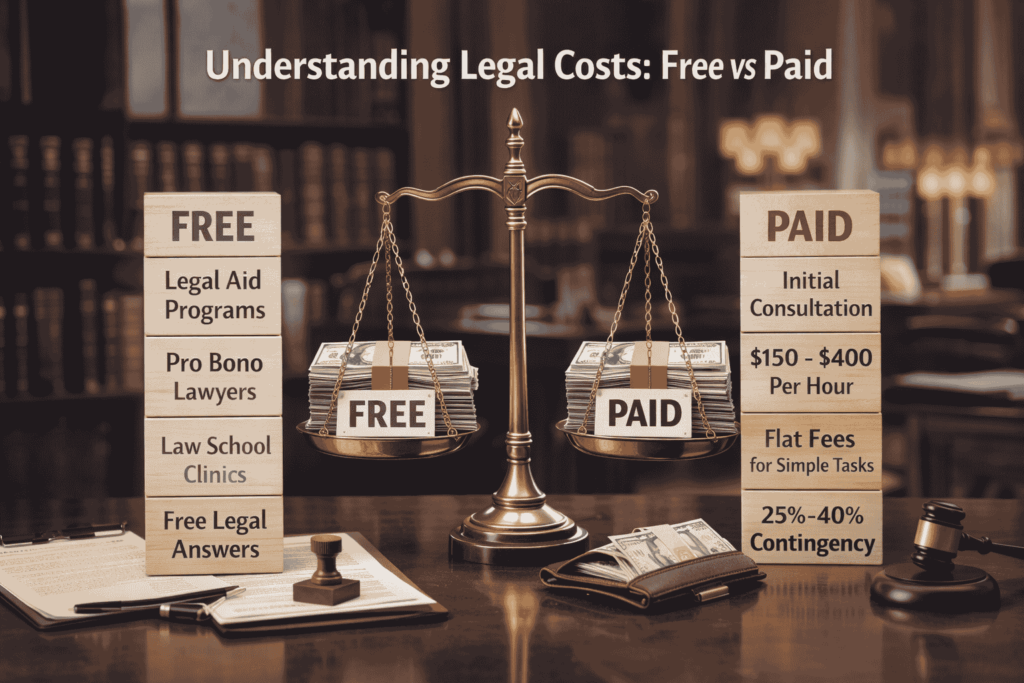
Understanding Legal Costs: Free vs Paid
Legal help does not always mean expensive. Many attorneys offer a free first consultation. Hourly rates typically run $150 to $400 per hour. Flat fees apply to simple defined tasks like drafting a will or filing a name change. Contingency arrangements mean you pay nothing upfront and the attorney takes 25 to 40% only if you win.
If cost is a concern, you are not out of options. Legal Services Corporation funds civil legal aid in all 50 states. Law school clinics offer free help supervised by licensed attorneys. The ABA Free Legal Answers platform connects you with volunteer lawyers at no charge. Your state bar association also runs pro bono referral programs where the first consultation is usually free.
Can Websites Give Legal Advice?
No. Websites including this one can only provide legal information. For advice specific to your situation, you must consult a licensed attorney. Responses from anonymous users on Reddit, Facebook groups, or legal forums do not constitute legal advice regardless of how detailed or confident they sound. No one there is legally accountable for what they tell you.
The only online platforms where you can receive real legal advice are those staffed by verified licensed attorneys, such as the ABA Free Legal Answers platform.
Building Confidence Through This Knowledge
Understanding this distinction is not a technicality. It is one of the most practical things you can know before a legal problem arrives.
When you know the difference between information and advice, you stop making decisions based on what worked for someone else in a different state with different facts. You start asking the right questions. You recognize when a situation genuinely needs a professional and when you can handle it yourself.
Most people who successfully navigate legal situations are not legal experts. They are simply people who know enough to ask the right questions and get help at the right moment. That moment is always earlier than you think. Start with the right information, then take the right step. The first consultation is almost always free.

This content is for general informational purposes only. It is not legal advice and does not create an attorney-client relationship. For guidance specific to your situation, please consult a licensed attorney in your state.